

.svg)

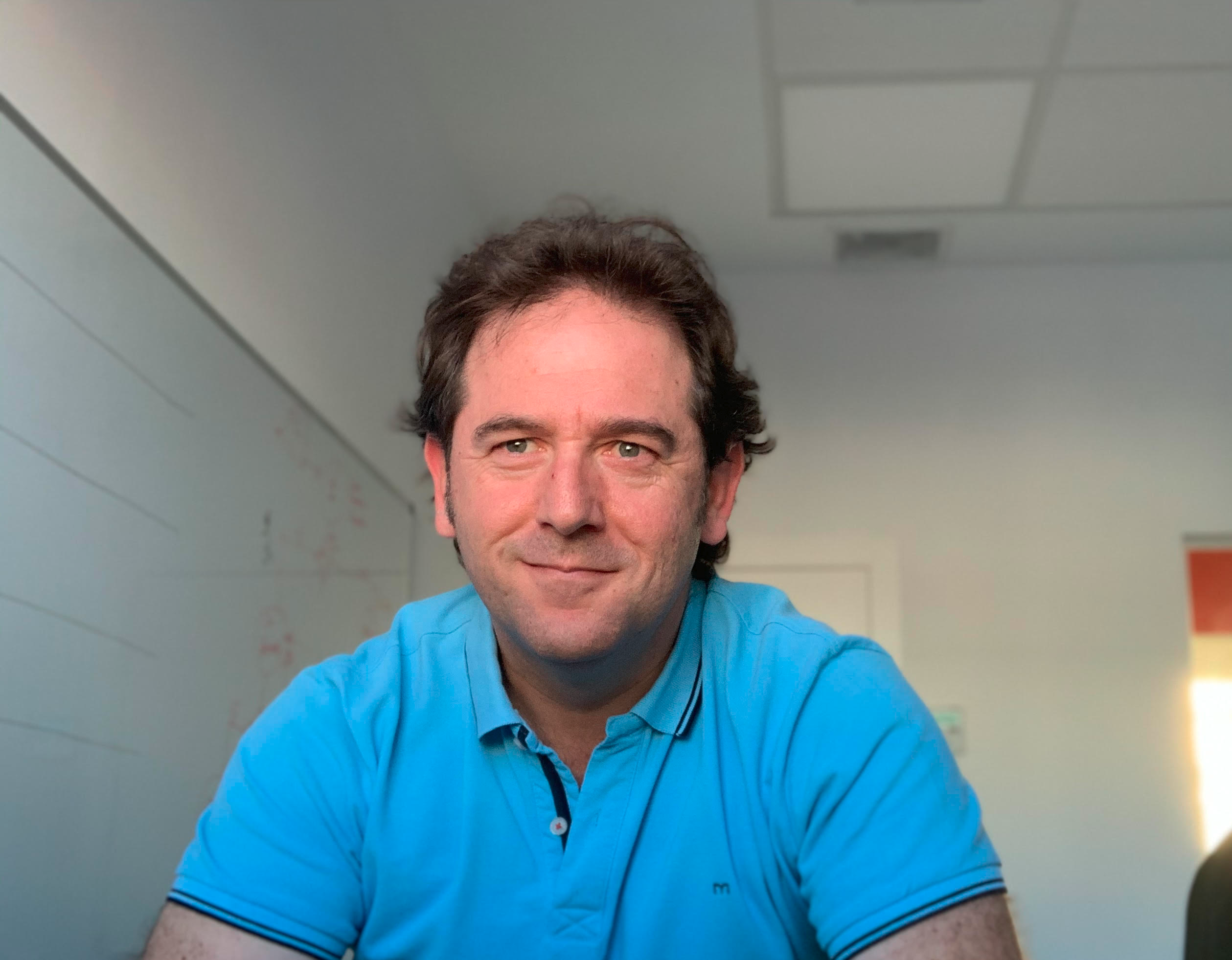
Federico Malpica: Transforming Education Does Not Start with Technology, but with People
At Squadmakers, we are interested in talking with people who are building technology products with a clear purpose and a deep vision of how to generate real impact. On this occasion, we spoke with Federico Malpica, CEO of TeachersPRO, about education, innovation, teachers’ professional development, and an issue that goes far beyond the education sector: how to make technology produce a real change in the way people work.
Federico’s career helps us understand why TeachersPRO approaches this challenge from a different perspective. With a PhD in Education Sciences from the Autonomous University of Barcelona, he has been working for more than two decades in educational quality, innovation, organizational development, and change management. He is also the founder of Instituto Escalae and has developed an important part of his professional activity between Spain and Finland.
The Problem Is Not Accessing Knowledge, but Turning It into Practice
One of the major changes brought about by the Internet is that knowledge is no longer a scarce resource. Today, we can access courses, videos, documentation, experts, and even artificial intelligence-based assistants almost immediately.
However, having access to information does not necessarily mean developing a skill.
This problem is especially evident in professional training. A person can attend a course, perfectly understand a methodology and, even so, return to work in exactly the same way the following day.
In the teaching field, Federico Malpica has been arguing for years that learning new ways of teaching requires more than simply consuming content. Professionals need to observe, practice, receive feedback, correct themselves, and try again until they turn that learning into a real capability.
That idea is also at the origin of TeachersPRO.
TeachersPRO: From Training to Skills Development
TeachersPRO does not approach teachers’ professional development as a simple library of courses. Its proposal is focused on ensuring that learning is ultimately transferred into the classroom.
The platform uses challenges, personalized learning paths, evidence of practice, and review processes so that teachers can develop specific skills and demonstrate how they apply them in real situations.
The difference may seem small, but it completely changes the objective of the product.
The question is no longer:
Has the user completed the course?
Instead, it becomes:
Are they able to apply what they have learned?
For any company working in training, certification, or talent management, this difference is fundamental. Traditional metrics, such as training hours, completed courses, or content viewed, mainly measure activity.
Evidence of performance attempts to measure capability.
This philosophy directly connects with some of the principles we apply at Squadmakers through Squad Challenge: evaluating technical skills in a context similar to the one the professional will later encounter in a real project.
The Parallel Between Teachers and Software Developers
Education and software development may seem like two very different sectors, but both share a fundamental problem:
How do we know whether a person really knows how to do what they claim to know how to do?
A résumé can list ten different technologies. A certification can demonstrate that someone has studied certain content. An interview can be used to verify knowledge.
But none of these tools completely replaces observing performance.
Exactly the same thing happens in software engineering.
A developer may perfectly understand the theory behind an architecture, correctly answer questions about a framework, or pass an automated test. The real difference appears when they have to analyze an incomplete problem, make decisions, implement a solution, explain their reasoning, and react to feedback.
That is why challenges based on real situations can provide a much more relevant signal about a person’s capability than a purely theoretical assessment.
Technology as Infrastructure, Not as the Objective
Another interesting aspect of Federico Malpica’s vision is his relationship with technology.
For years, many educational digitalization processes have made the same mistake: introducing technology while expecting it, by itself, to transform the methodology.
Classrooms could be filled with computers, digital whiteboards, and new tools while the way of teaching remained practically the same.
Today, we are seeing a similar phenomenon with artificial intelligence.
Adding AI to a process does not guarantee its transformation.
If we use artificial intelligence only to execute a poorly designed process faster, we will probably only succeed in automating its inefficiencies.
The relevant question should be different:
What behavior do we want to change, and how can technology help us achieve it?
TeachersPRO addresses precisely this issue by trying to make technology support a continuous process of professional improvement. Software thus becomes an infrastructure for facilitating practice, monitoring, feedback, and skills development.
Finland and the Importance of the Ecosystem
The story of TeachersPRO also has a particularly interesting international component.
Federico, born in Mexico and professionally developed for many years in Spain, later moved part of his activity to Finland. TeachersPRO has continued to evolve within the Finnish educational and technology ecosystem, one of the most internationally recognized for its commitment to education and innovation.
This journey demonstrates something common among specialized startups: when technology, research, and deep industry knowledge come together within the same ecosystem, the possibilities of building truly differentiated products increase considerably.
TeachersPRO aims to combine precisely these three elements:
educational research, methodology, and technology.
It is not simply about building an EdTech platform, but about using software to make a professional development model based on years of research and experience with educational institutions scalable.
The Real Challenge of AI Will Be Changing Behaviors
Artificial intelligence can generate content, answer questions, analyze information, and personalize learning experiences at a scale that seemed impossible just a few years ago.
But probably the most difficult challenge remains exactly the same:
getting people to do something differently after learning.
A developer can ask an AI how to write better tests. A teacher can ask it for new classroom activities. An executive can generate a new work process in seconds.
The value appears when that knowledge becomes behavior.
And achieving this still requires many of the things we already know: real context, practice, feedback, support, repetition, and evidence.
Technology can accelerate this entire cycle.
But it can hardly replace it.
From Consuming Training to Demonstrating Capability
The conversation with Federico Malpica leaves us with a reflection that is especially relevant for those of us working in technology, training, and talent.
For many years, we have built a large part of professional training around a logic of consumption:
reading, listening, viewing, and completing.
The next step will probably be to build systems around a logic of capability:
practicing, demonstrating, receiving feedback, improving, and trying again.
TeachersPRO is exploring this approach in teachers’ professional development.
At Squadmakers, we share a similar philosophy when we use real challenges to evaluate and certify technology professionals.
Because whether we are talking about a teacher standing in front of a classroom or a developer joining a new Squad, there is one question that ultimately becomes much more important than any degree, course, or certificate:
Can they do it when it really matters?
About Federico Malpica
Federico Malpica Basurto holds a PhD in Education Sciences from the Autonomous University of Barcelona, is the founder of Instituto Escalae, and is the CEO of TeachersPRO. Since the late 1990s, he has worked in research, consulting, and training related to educational quality, innovation, organizational development, and change management.
His work has focused particularly on how to help professionals and educational institutions transform knowledge into real and sustainable practices, using skills-development methodologies and technological tools to make these processes more scalable.
Squadmakers’ Conclusion
At Squadmakers, we believe that the future of talent involves evaluating less what a person says they know and observing more what they are actually capable of doing. The conversation with Federico Malpica reinforces an idea that we deeply share: learning only generates value when it becomes applied capability.
This principle applies to education, but also to software development, technical hiring, and team development. That is why we believe in models based on real challenges, evidence of performance, continuous feedback, and practical improvement. Technology and artificial intelligence can accelerate these processes, but the ultimate objective remains the same: building professionals and teams capable of responding better to real problems.
The full interview with Federico Malpica is available on Squadmakers’ YouTube channel.